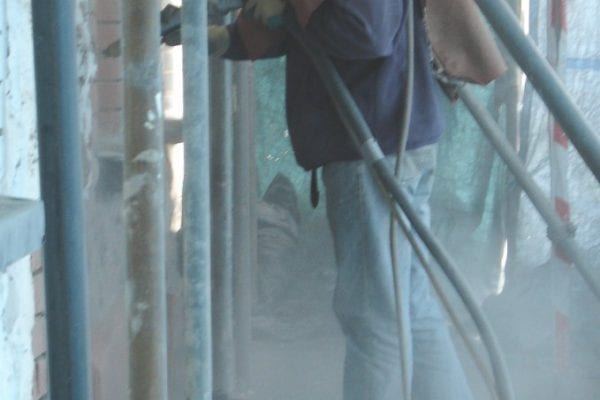

California is poised to become the first state to ban the production and installation of engineered quartz, the popular countertop material. The state’s Occupational Safety and Health Standards Board is expected to adopt an emergency regulation targeting engineered stone that contains more than 1% crystalline silica. The proposal reflects growing alarm over silicosis among the workers who cut it. Here’s what you need to know, and how it may impact your operation.
What Silica Does to the Body
Respirable crystalline silica is about 100 times smaller than a grain of sand, and the particles lodge deep in the lungs. The body’s immune response results in scar tissue that gradually reduces lung function. Silicosis can progress even after exposure ends, and there is no cure. Silica exposure is also linked to lung cancer and COPD. Silicosis patients often need a lung transplant.
Since 2019, California has confirmed over 650 silicosis cases and 35 deaths among countertop workers. No comparable national count exists because most states don’t systematically track the disease. Cases have been documented in Colorado, Texas, Washington, Massachusetts, and Florida, and experts believe many more go undiagnosed.
OSHA Is Already Focused on This Industry
In September 2023, OSHA launched an initiative that supplements its National Emphasis Program on respirable crystalline silica and prioritizes inspections in the engineered stone fabrication and installation industries. It targets Cut Stone and Stone Product Manufacturing (NAICS 327991) and Brick, Stone and Related Construction Material Merchant Wholesalers (NAICS 423320). Those inspections cover OSHA Regions 1 through 8, which include Florida and the rest of the Southeast. Fabrication shops should expect inspectors to ask for exposure monitoring data, written exposure control plans, and evidence that dust controls are working.
Other States Are Paying Attention
California often sets the pace for workplace safety regulation. Australia has already banned engineered stone, and New York City and Massachusetts have issued health advisories about silica dust. Employers in Florida and across the Southeast should expect increased scrutiny.
Silica Isn’t Just a Countertop Issue
A ban on new quartz wouldn’t end silica exposure – silica is also present in concrete, brick, mortar, and natural stone. OSHA’s respirable crystalline silica standard sets a permissible exposure limit of 50 µg/m³ as an 8-hour time-weighted average, with an action level of 25 µg/m³.